
Fulvestrant Injection for Advanced Breast Cancer
Fulvestrant Injection is a prescription hormonal medicine used in the treatment of certain hormone receptor-positive breast cancers. It is administered by a healthcare professional as a slow intramuscular injection into the buttocks. Fulvestrant is an estrogen receptor antagonist that works by binding to estrogen receptors and promoting their degradation, which can reduce estrogen-related signaling in certain breast cancer cells. ()
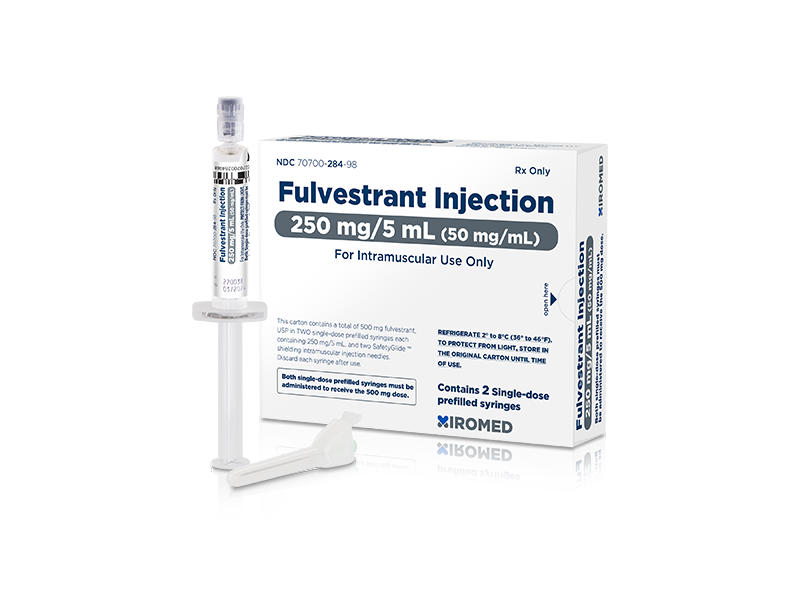
Xiromed Fulvestrant Injection is supplied as a solution for intramuscular use. The standard presentation contains 250 mg of fulvestrant in 5 mL. The recommended treatment dose for approved indications is generally 500 mg, administered as two separate 5 mL injections, one into each buttock. Treatment timing and combination therapy depend on the patient’s diagnosis, previous treatment, menopausal status, and the prescribing oncologist’s clinical judgment. ()
This product information is intended for educational and pharmaceutical reference purposes. Fulvestrant Injection should be prescribed, prepared, and administered only by qualified healthcare professionals.
What Is Fulvestrant Injection?
Fulvestrant Injection is an estrogen receptor antagonist used for specific forms of advanced or metastatic breast cancer. The medicine is designed for patients whose tumors express hormone receptors and do not express human epidermal growth factor receptor 2, commonly referred to as HR-positive and HER2-negative breast cancer.
Depending on the approved indication and treatment plan, Fulvestrant Injection may be used in postmenopausal women who have not previously received endocrine therapy for advanced disease. It may also be used for advanced or metastatic HR-positive, HER2-negative breast cancer that has progressed after earlier endocrine treatment. Fulvestrant may be prescribed alone or together with targeted medicines such as a CDK4/6 inhibitor when the combination is clinically appropriate. ()
Breast cancer treatment is highly individualized. Before prescribing Fulvestrant Injection, an oncologist may consider hormone receptor testing, HER2 status, previous endocrine therapy, disease progression, other medicines, liver function, bleeding risk, and the patient’s overall health.
Unlike oral endocrine treatments, Fulvestrant Injection is delivered directly into muscle at scheduled intervals. This may be useful for treatment plans where an injectable formulation is preferred or where the medicine is being used in combination with another cancer therapy.
Fulvestrant Injection Product Details
Important product details may include:
- Active ingredient: Fulvestrant
- Dosage form: Injectable solution
- Route of administration: Intramuscular injection
- Common strength: 250 mg per 5 mL
- Typical total treatment dose: 500 mg
- Administration site: Gluteal muscles, using one injection on each side
- Administration method: Slow injection by a trained healthcare professional
- Prescription status: Prescription-only medicine
- Treatment setting: Oncology clinics, hospitals, and qualified healthcare facilities
Product packaging, labeling, availability, and manufacturer-specific details should be confirmed through current product documentation and authorized pharmaceutical distribution channels. Healthcare providers should use the prescribing information supplied with the specific product being administered.
Fulvestrant Injection Uses
Fulvestrant Injection is used to treat certain types of advanced or metastatic breast cancer. The medicine is specifically associated with HR-positive, HER2-negative disease, where cancer growth may be influenced by estrogen receptor signaling.
In one approved treatment setting, Fulvestrant Injection is used for postmenopausal women with HR-positive, HER2-negative advanced breast cancer who have not previously received endocrine therapy. It may also be used for HR-positive, HER2-negative advanced breast cancer that has progressed after prior endocrine treatment. ()
Fulvestrant Injection may be used as a single-agent endocrine treatment or as part of a combination regimen. When used with medicines such as palbociclib, abemaciclib, or ribociclib, the complete treatment plan includes separate dosing instructions for each medicine. Patients should not begin, stop, or adjust any part of a combination regimen without speaking with their oncology team.
The decision to use Fulvestrant Injection depends on clinical factors such as the cancer’s receptor profile, whether the cancer has spread, prior treatment history, the presence of measurable disease, and the patient’s tolerance of previous medicines. Fulvestrant is not intended to treat every type of breast cancer and is not a substitute for diagnostic testing or specialist care.
How Fulvestrant Injection Is Administered
The recommended dose of Fulvestrant Injection is typically 500 mg, given as two 5 mL intramuscular injections. One injection is administered into each buttock, and each injection is delivered slowly over approximately one to two minutes. The usual schedule includes administration on Days 1, 15, and 29, followed by one injection every month. ()
The injection must be administered by a healthcare professional using appropriate technique. Because the product is given in the gluteal area, the healthcare professional should consider the location of important nerves and blood vessels. Patients should tell the administering professional about any previous injection-site problems, bleeding disorders, or medicines that may affect blood clotting.
Patients should attend every scheduled appointment unless the oncology team provides different instructions. If an appointment is missed, the patient should contact the clinic promptly to arrange a new treatment date. A missed or delayed dose should not be replaced with an extra dose unless specifically directed by the prescriber.
Fulvestrant Injection Safety Information
Fulvestrant Injection is contraindicated in patients with a known hypersensitivity to fulvestrant or any component of the formulation. Tell the healthcare professional about all known allergies, previous reactions to medicines, and current treatments before receiving the injection.
Fulvestrant may cause injection-site reactions, including pain, discomfort, swelling, bruising, bleeding, or inflammation. Some patients may experience muscle, joint, or bone pain, hot flashes, nausea, fatigue, headache, weakness, or gastrointestinal symptoms. The likelihood and severity of side effects vary from person to person.
Because Fulvestrant Injection is administered intramuscularly, special care may be required in patients with bleeding disorders or those taking anticoagulants or antiplatelet medicines. Patients should provide a complete list of prescription medicines, over-the-counter products, vitamins, and supplements before treatment.
Fulvestrant may also be associated with increased liver enzymes or other changes in liver function. Patients with liver impairment may require careful medical assessment and monitoring. The prescribing healthcare professional will determine whether the dose or treatment approach is appropriate.
Women who are pregnant or who may become pregnant should discuss the risks with their healthcare provider. Fulvestrant may cause fetal harm based on its pharmacologic activity. Patients should follow their oncology team’s instructions regarding pregnancy prevention during treatment and for the recommended period afterward. Breastfeeding is also a medical consideration that must be discussed with the prescriber.
Storage and Handling of Fulvestrant Injection
Fulvestrant Injection should be stored according to the product label and handled by authorized healthcare facilities. The product is generally kept refrigerated at 2°C to 8°C, or 36°F to 46°F, and should be protected from light. Do not freeze the medicine. Allowing the product to remain outside the recommended temperature range may affect its suitability for use.
Healthcare facilities should check the expiration date, packaging integrity, syringe condition, product appearance, and storage history before administration. Do not use a syringe if it is damaged, leaking, cloudy, discolored, or contains visible particles that are not described in the official product information.
Fulvestrant Injection is a specialized oncology medicine and should be administered only under the direction of an oncology professional. Patients should report severe or unusual symptoms, worsening pain, signs of infection, heavy bleeding, breathing difficulty, chest pain, sudden weakness, or signs of a serious allergic reaction immediately.
This information is for general education and pharmaceutical reference only. Fulvestrant Injection is a prescription cancer treatment and should be used only according to the current prescribing information and the individualized instructions of a qualified healthcare professional.
Be the first to review “Fulvestrant Injection, 250 mg/5 mL (50 mg/mL)”
Related products
Reviews
There are no reviews yet.